


eeBoo Little Farm Head To Toe Dominoes Matching Game
eeBoo Little Farm Head To Toe Dominoes Matching Game
Best For
Couldn't load pickup availability


Product Overview
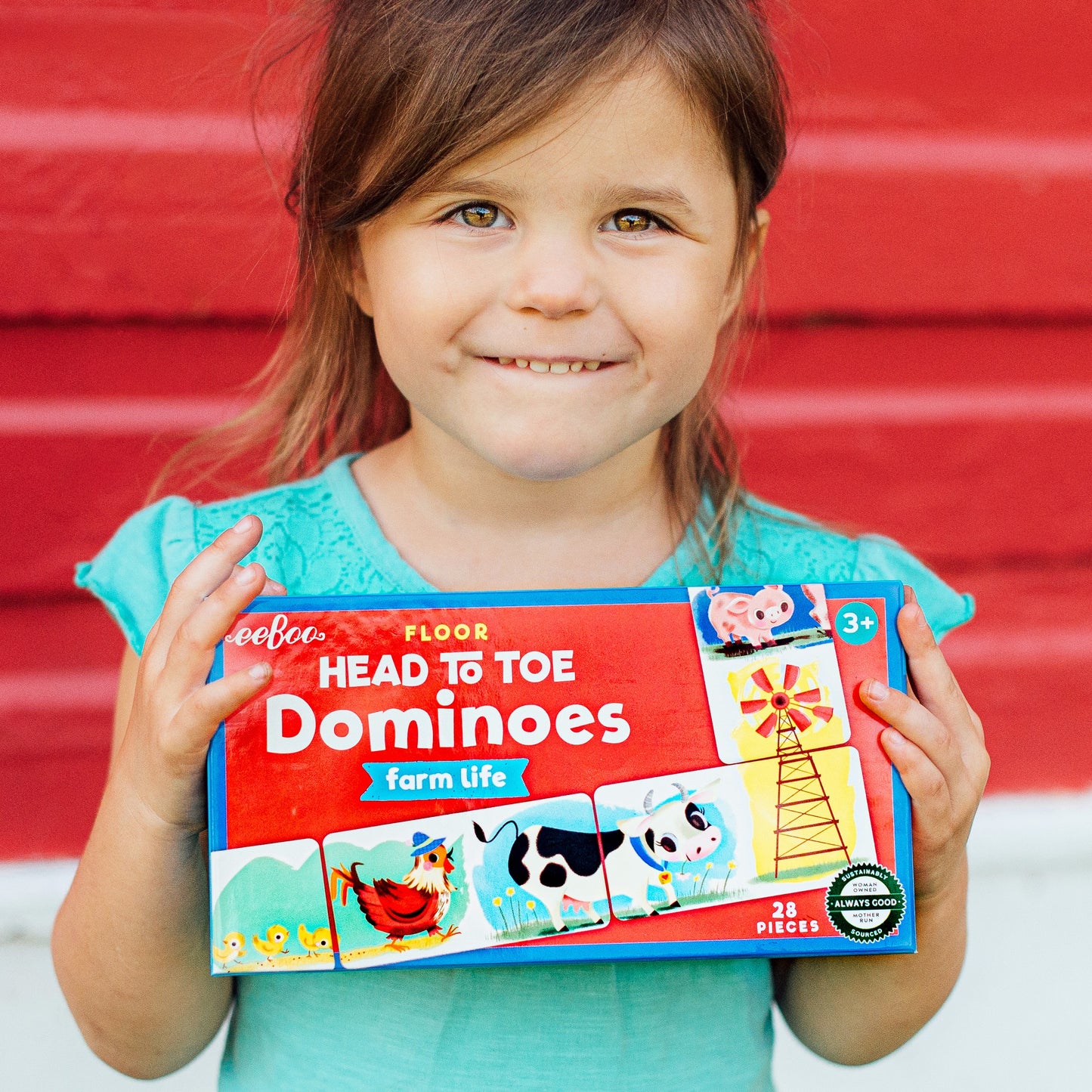
eeBoo's Little Farm Head to Toe Dominoes puts a barnyard twist on classic dominoes. Instead of matching dots, players connect the top half (heads) and bottom half (tails) of farmyard animals and farm objects to build a growing chain. From hens to cows, roosters to barns, each tile features colorful illustrations by artist Jill Howarth that turn a simple matching game into a visual storytelling experience. The sturdy, thoughtfully sized box makes it easy to play at home or pack for trips.
- Teaches matching and sequencing through visual recognition of farm-themed imagery
- Encourages logic, observation, and fine motor skills as children piece together the chain
- Compact and portable box stores the set neatly and travels easily
- Playful barnyard illustrations spark curiosity, concentration, and imaginative storytelling
You May Also Like


Full Details
Care Notes
- cleaning: Wipe tiles with a damp cloth and dry thoroughly before returning to the box.
- storage: Store all tiles in the original box to prevent loss and keep pieces organized.
Use Cases
- Rainy afternoon activity for preschoolers learning matching games
- Travel game for long car rides or airplane trips
- Quiet play option during sibling naptime
- Introduction to game rules and turn-taking for young children
- Birthday gift for a farm-loving 5-year-old
- Classroom center activity for early elementary students
- Grandparent visit entertainment that's easy to set up and pack away
Skills Developed
- primary skill: Visual matching and pattern recognition
- concentration: Sustaining focus while scanning tiles to find the correct head or tail match
- fine motor: Handling and placing tiles precisely to build the chain
- storytelling: Creating narratives about the barnyard animals and their connections
Age Suitability
- minimum safe age: 3 years
- ideal age range: 4-7 years
- developmental fit: 3-4 years: Practices visual matching and learns to follow simple game rules with adult guidance. 5-7 years: Plays independently or with peers, creating longer chains and inventing stories about the farm animals.
Play Patterns
- primary play type: Matching game with sequential chain-building
- play structure: Players take turns matching the head or tail of a tile to the open end of the growing chain
- social context: Works for solo play, cooperative family play, or turn-based play with 2-4 children
- adult involvement: Minimal supervision needed once rules are understood; adults may guide younger children through first few rounds
- play progression: Children start by focusing on correct matches, then progress to strategic tile placement and creating longer chains
- session length: 10-20 minutes per round, with multiple rounds common as children enjoy rebuilding the chain
Why It Works
- primary benefit: The head-to-tail matching mechanic makes pattern recognition intuitive and visually clear for young children still developing abstract thinking skills.
- secondary benefit: The farm theme provides familiar, concrete imagery that helps children stay engaged while learning game rules and turn-taking.
What Makes It Fun
- Players match animal heads and tails to build a barnyard domino chain. A fun twist on classic dominoes with farm friends.
Why They'll Love It
- * Match barnyard animal heads and tails to build a chain * Portable box stores all pieces for easy cleanup * Teaches matching and sequencing through farm imagery
Customer Q&A
How is this different from regular dominoes?
Players match the top half (heads) and bottom half (tails) of barnyard animals and farm objects to create a chain, instead of matching numbers or dots.
What animals are included in the set?
The set features hens, cows, roosters, and other barnyard animals along with farm objects like barns.
Is the box sturdy enough for travel?
The set comes in a sturdy, thoughtfully sized box designed for storage and transport, making it suitable for on-the-go play.
What skills does this game teach?
The game builds visual matching skills, concentration, and pattern recognition while encouraging imaginative storytelling about farm animals.
Can one child play this alone?
Yes, a child can play independently by creating the longest chain possible, matching heads to tails in sequence.


