


Green Science Weather Science Experiment Kit
Green Science Weather Science Experiment Kit
Best For
Couldn't load pickup availability


Product Overview
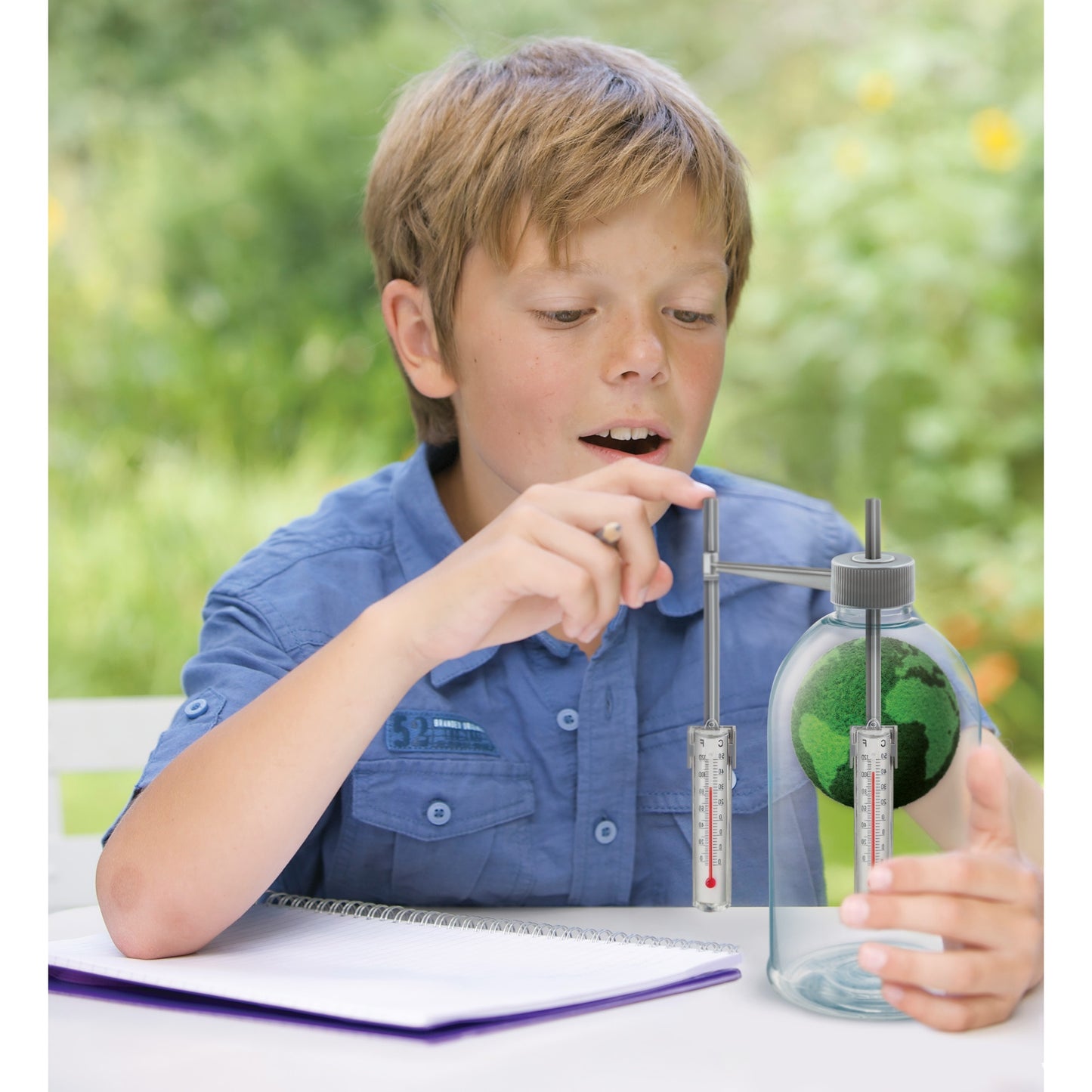
The Green Science: Weather Science kit brings atmospheric phenomena to life through hands-on experiments that reveal how Earth's weather systems work. Young scientists will experiment with static electricity to understand lightning formation, create clouds in the palm of their hand, construct a desktop water cycle model, and investigate the greenhouse effect and acid rain. Each activity transforms abstract meteorological concepts into tangible, observable science that kids can see and measure themselves.
- Build a working water cycle model to watch evaporation, condensation, and precipitation in action on a desktop
- Generate static electricity with a charged balloon to bend water and simulate the electrical forces that produce lightning
- Investigate environmental science through greenhouse effect and acid rain experiments that connect weather to ecology
- Grow plants in a self-contained ecosystem while observing how weather conditions affect living organisms
- Hands-on approach to STEM learning makes complex atmospheric science accessible and visible for students and eco-curious young scientists
You May Also Like


Mickey Mouse 15-Inch Fly Wheel Cruiser Ride-On


Masters Of The Universe Movie Battle Cat 11-Inch Creature Figure With Chomp & Roar


Disney Pixar Toy Story 5 Running Woody 12-Inch Action Figure With Sounds


Toy Story 5 Buzz Lightyear Space Ranger Laser Gauntlet With 35+ Sounds


Hot Wheels Buzz Lightyear Star Command Adventure Track Set With Die-Cast Vehicle


Disney Pixar Toy Story 5 Blaze's Pet Pig Interactive Feature Plush Toy


Disney Pixar Toy Story 5 Lil' Partner Bullseye Interactive Posing Horse Figure


Disney Pixar Toy Story 5 Critter Talk Jessie 12-Inch Action Figure With Pig


Masters Of The Universe Skeletor Mask With Lights & Sounds Roleplay Costume


LEGO Star Wars AT-RT Attack Building Set, 297 Pieces


Fashems My Little Pony Collectible Squishy Mini Figures


Star Wars The Child Grogu 10-Inch Interactive Plush With Sound And Movement


Nerf Star Wars The Mandalorian Rocket Gauntlet With 6 Darts Ages 5+


Star Wars ActionVerse AT-RT & Imperial Remnant AT-RT Driver Vehicle Set


Star Wars The Mandalorian Grogu 6.5-Inch Action Figure


VTech Baby Hello Hippo Soft Phone Toy - Ages 6+ Months


Star Wars The Mandalorian Electronic Mask With Sound Effects


AquaPlay Harbor Waterway Playset With Crane, Pump, Slide, 3 Boats And 2 Figures


Super Mario Yoshi Egg Galaxy Movie Action Figure Playset


JAKKS Pacific Super Mario Galaxy Movie Bowser Jr. 5-Inch Action Figure Set


Super Mario Galaxy Movie 5 Inch Collector Yoshi Figure


Super Mario Galaxy Movie - 5" Mario Action Figure Set


SUPER MARIO Movie Gateway Galaxy Diorama Action Figure Set


Barbie Signature Kylie Minogue 12 Inch Collectible Doll


Play-Doh Disney Junior Mickey Mouse Stamp and Go Creative Megapack


Disney Princess 11.5" - Rapunzel Fashion Doll


Play-Doh Burger Truck Creations Playset - Culinary Art Fun


Disney Princess Fashion Doll - Moana 11.5 Inch


SEGA DC Comics Sonic & Batman 6-Inch Action Figures - Shadow & Batman Duo


Sonic The Hedgehog Deluxe Action Figures - Tails & Cyborg 6 Inch Collectibles


SEGA DC Comics Sonic & Superman Action Figures - Ultimate Hero Pack


SEGA DC Comics Sonic & Wonder Woman 6 Inch Action Figures - Dual Pack


Hot Wheels Mega Loop Garage - Ultimate Racing Playset


Hot Wheels City Shark Chomp Beach Playset


Disney Pixar Cars Stunting Speedway Playset with Piston Cup


Imaginext Disney Pixar Toy Story Pizza Planet Playset With Buzz Lightyear


Imaginext Disney Pixar Toy Story Jessie & Bullseye 3-Inch Figure Playset


Fisher Price Little People Super Mario 6-Figure Playset


Fisher Price Little People My Mario Bowser's Airship Playset


Fisher Price Little People My Mario Adventure Playset - Musical Fun


Fisher Price Little People Disney Jr. Mickey and Minnie Musical Train


Fisher Price 3-in-1 Kick and Sway Activity Gym – Sensory Delight


Discovery #MINDBLOWN Sensory Science Test Tube Chemistry Lab Set


Barbie Deluxe Style Fashion Doll - Trendy Denim Ensemble


Barbie Cutie Reveal Cuddly Series Doll - Plush Animal Costumes
Full Details
Care Notes
- storage: Store all components in a dry location to prevent damage to materials used in water-based experiments.
- cleaning: Wipe down reusable components with a damp cloth after experiments involving water or other materials.
Use Cases
- Hands-on science learning for elementary students
- Rainy day educational activity at home
- Classroom demonstration of weather phenomena
- Birthday gift for a child interested in meteorology
- Homeschool science curriculum supplement
- After-school STEM enrichment project
Skills Developed
- primary skill: Scientific observation and experimentation
- critical thinking: Understanding cause-and-effect relationships in natural weather processes
- environmental awareness: Learning about climate phenomena and environmental issues like acid rain and the greenhouse effect
Age Suitability
- minimum safe age: 8 years
- ideal age range: 8-12 years
- developmental fit: 8-10 years: Ideal for understanding cause-and-effect relationships in weather systems and following multi-step experiment procedures. 11-12 years: Supports deeper exploration of climate science concepts like the greenhouse effect and environmental impact of acid rain.
Play Patterns
- primary play type: Structured scientific experimentation
- play structure: Step-by-step experiments with observable results that demonstrate specific weather phenomena
- social context: Individual experimentation or small group learning with shared observation and discussion
- adult involvement: Adult guidance recommended for experiment setup, safety oversight, and explaining scientific concepts
- play progression: Children conduct each experiment independently, then can repeat or combine concepts to deepen understanding
- session length: 20 to 45 minutes per experiment, with multiple experiments available across several sessions
Why It Works
- primary benefit: Transforms abstract weather concepts into tangible experiments that children can observe and manipulate directly.
- secondary benefit: Builds scientific thinking by connecting everyday weather phenomena to hands-on demonstrations of the underlying processes.
What Makes It Fun
- Build real weather experiments and watch how storms and climate work right on your table.
Why They'll Love It
- * Hands-on experiments explore weather patterns * Create clouds and greenhouse effects * STEM learning through climate science activities
Customer Q&A
What experiments are included in this kit?
The kit includes experiments on static electricity to demonstrate lightning, creating clouds, building a desktop water cycle model, and studying the greenhouse effect and acid rain.
What weather concepts does this kit teach?
This kit teaches how lightning forms through static electricity, cloud formation, the water cycle, the greenhouse effect, and acid rain.
Is this suitable for classroom use?
Yes, this kit is designed for educational use and works well for students learning about weather and climate processes.
Does this require adult supervision?
Adult supervision is recommended for conducting the experiments safely and understanding the scientific concepts.

