


Thames & Kosmos My Robotic Pet Coding Chameleon STEM Kit Ages 8+
Thames & Kosmos My Robotic Pet Coding Chameleon STEM Kit Ages 8+
Best For
Couldn't load pickup availability


Product Overview
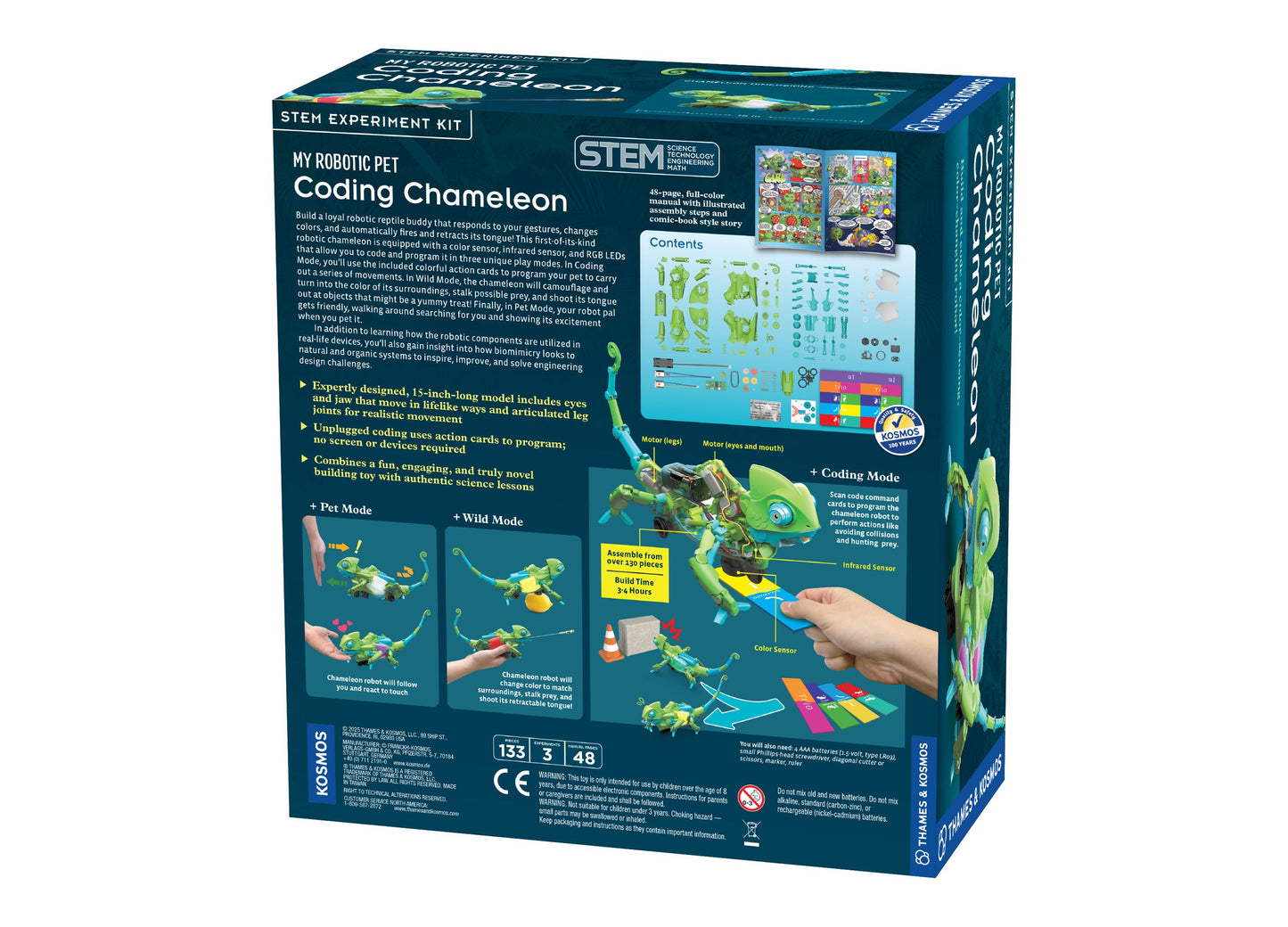
This buildable robotic chameleon brings coding to life with three play modes powered by a color sensor, infrared sensor, and LED lights. Kids ages 8 and up assemble the mechanical reptile piece by piece, then program it to respond to hand gestures, change colors, and automatically fire and retract its tongue. The kit introduces real coding concepts through hands-on robotics, showing how sensors and programming work in actual devices while exploring biomimicry (the science of learning from nature to solve engineering problems).
- Three interactive play modes let kids code different behaviors and responses into their robotic pet
- Color sensor and infrared sensor allow the chameleon to detect and react to its environment
- Assembly process teaches how robotic components fit together and function as a system
- Tongue mechanism fires and retracts automatically when programmed, mimicking real chameleon hunting behavior
- STEM learning covers coding basics, sensor technology, and nature-inspired engineering design
You May Also Like


Sakar Bluey 3D 3-Wheel Kick Scooter


Mickey Mouse 15-Inch Fly Wheel Cruiser Ride-On


Masters Of The Universe Movie Battle Cat 11-Inch Creature Figure With Chomp & Roar


Disney Pixar Toy Story 5 Running Woody 12-Inch Action Figure With Sounds


Toy Story 5 Buzz Lightyear Space Ranger Laser Gauntlet With 35+ Sounds


Hot Wheels Buzz Lightyear Star Command Adventure Track Set With Die-Cast Vehicle


Disney Pixar Toy Story 5 Blaze's Pet Pig Interactive Feature Plush Toy


Disney Pixar Toy Story 5 Lil' Partner Bullseye Interactive Posing Horse Figure


Disney Pixar Toy Story 5 Critter Talk Jessie 12-Inch Action Figure With Pig


Masters Of The Universe Skeletor Mask With Lights & Sounds Roleplay Costume


Fashems My Little Pony Collectible Squishy Mini Figures


Star Wars The Mandalorian & Grogu Bounty Blaster 11-Inch Action Figure


Star Wars The Child Grogu 10-Inch Interactive Plush With Sound And Movement


Nerf Star Wars The Mandalorian Rocket Gauntlet With 6 Darts Ages 5+


Star Wars ActionVerse AT-RT & Imperial Remnant AT-RT Driver Vehicle Set


Star Wars The Mandalorian Grogu 6.5-Inch Action Figure


VTech Baby Hello Hippo Soft Phone Toy - Ages 6+ Months


Star Wars The Mandalorian Electronic Mask With Sound Effects


AquaPlay Harbor Waterway Playset With Crane, Pump, Slide, 3 Boats And 2 Figures


Super Mario Yoshi Egg Galaxy Movie Action Figure Playset


Super Mario Galaxy Movie Deluxe Bowser Castle Playset - Collector's Edition


Jakks Pacific Super Mario Galaxy Movie 5" Action Figure - Rosalina


JAKKS Pacific Super Mario Galaxy Movie Bowser Jr. 5-Inch Action Figure Set


Super Mario Galaxy Movie 5 Inch Collector Yoshi Figure


Super Mario Galaxy Movie - 5" Mario Action Figure Set


SUPER MARIO Movie Gateway Galaxy Diorama Action Figure Set


Barbie Signature Kylie Minogue 12 Inch Collectible Doll


Play-Doh Disney Junior Mickey Mouse Stamp and Go Creative Megapack


Disney Princess 11.5" - Rapunzel Fashion Doll


Play-Doh Burger Truck Creations Playset - Culinary Art Fun


Disney Princess Fashion Doll - Moana 11.5 Inch


SEGA DC Comics Sonic & Batman 6-Inch Action Figures - Shadow & Batman Duo


Sonic The Hedgehog Deluxe Action Figures - Tails & Cyborg 6 Inch Collectibles


SEGA DC Comics Sonic & Superman Action Figures - Ultimate Hero Pack


SEGA DC Comics Sonic & Wonder Woman 6 Inch Action Figures - Dual Pack


Hot Wheels Mega Loop Garage - Ultimate Racing Playset


Hot Wheels City Shark Chomp Beach Playset


Hot Wheels Stunt Tracks Power Launch Champion Track Set


Disney Pixar Cars Stunting Speedway Playset with Piston Cup


Imaginext Disney Pixar Toy Story Pizza Planet Playset With Buzz Lightyear


Imaginext Disney Pixar Toy Story Jessie & Bullseye 3-Inch Figure Playset


Fisher Price Little People Super Mario 6-Figure Playset


Fisher Price Little People My Mario Bowser's Airship Playset


Fisher Price Little People My Mario Adventure Playset - Musical Fun
Full Details
Care Notes
- cleaning: Wipe plastic components with a dry or slightly damp cloth. Keep sensors free from dust and debris.
- storage: Store in a dry location away from direct sunlight to protect electronic components and sensors.
- material warnings: Contains small electronic parts. Keep away from water and moisture.
Use Cases
- Introducing coding concepts to children ages 8 and up through hands-on robotics
- STEM learning activity for elementary school classrooms
- Birthday or holiday gift for kids interested in robotics and engineering
- Solo play project that combines building and programming
- After-school activity that teaches biomimicry and sensor technology
- Educational gift for children who enjoy interactive pets and technology
Skills Developed
- primary skill: Coding and programming logic
- engineering thinking: Understanding how robotic components function in real devices and biomimicry in design
- problem solving: Troubleshooting sensor responses and programming sequences
- fine motor: Assembling small robotic parts and electronic components
Age Suitability
- minimum safe age: 8 years
- ideal age range: 8-12 years
- developmental fit: 8-10 years: Perfect for developing logical thinking and sequential programming skills through guided coding activities and sensor exploration. 11-12 years: Allows for more complex programming experiments and deeper understanding of how sensors and robotics work together.
Play Patterns
- primary play type: Constructive and educational play with interactive programming
- play structure: Initial assembly followed by ongoing coding and programming experimentation across three play modes
- social context: Solo activity with opportunities to share programmed behaviors and coding discoveries
- adult involvement: Minimal supervision needed after initial assembly guidance for children 8 and up
- play progression: Starts with building the chameleon, advances to basic programming, then explores more complex sensor interactions and color responses
- session length: Initial build takes 1 to 2 hours, followed by 20 to 45 minute programming sessions
Why It Works
- primary benefit: Transforms abstract coding concepts into tangible, interactive experiences through building and programming a responsive robotic pet.
- secondary benefit: Demonstrates real-world applications of sensors and robotics while teaching biomimicry and engineering problem-solving.
What Makes It Fun
- Build a robotic chameleon that changes colors, reacts to your hand gestures, and fires its sticky tongue on command. It's part pet, part science project.
Why They'll Love It
- * Build a robotic chameleon that responds to hand gestures * Color-changing body and auto-firing tongue bring it to life * Code the pet's behaviors using hands-on STEM principles * Interactive companion combines robotics and programming
Customer Q&A
What age is this robotic chameleon designed for?
This kit is designed for children ages 8 and up.
What sensors does the chameleon have?
The robotic chameleon is equipped with a color sensor, infrared sensor, and LEDs.
How many play modes does it have?
The chameleon can be coded and programmed in 3 unique play modes.
Does the chameleon's tongue move?
Yes, the chameleon automatically fires and retracts its tongue.
What does this kit teach?
This kit teaches coding, how robotic components work in real devices, and biomimicry principles in engineering design.
Does the child build the chameleon themselves?
Yes, children assemble the robotic chameleon as part of the build-and-play experience.
Does the chameleon respond to gestures?
Yes, the robotic chameleon responds to gestures and changes colors based on programming.

