


Addition Triangles Hands-On Math Learning Set With 36 Fact Family Triangles
Addition Triangles Hands-On Math Learning Set With 36 Fact Family Triangles
Best For
Couldn't load pickup availability


Product Overview
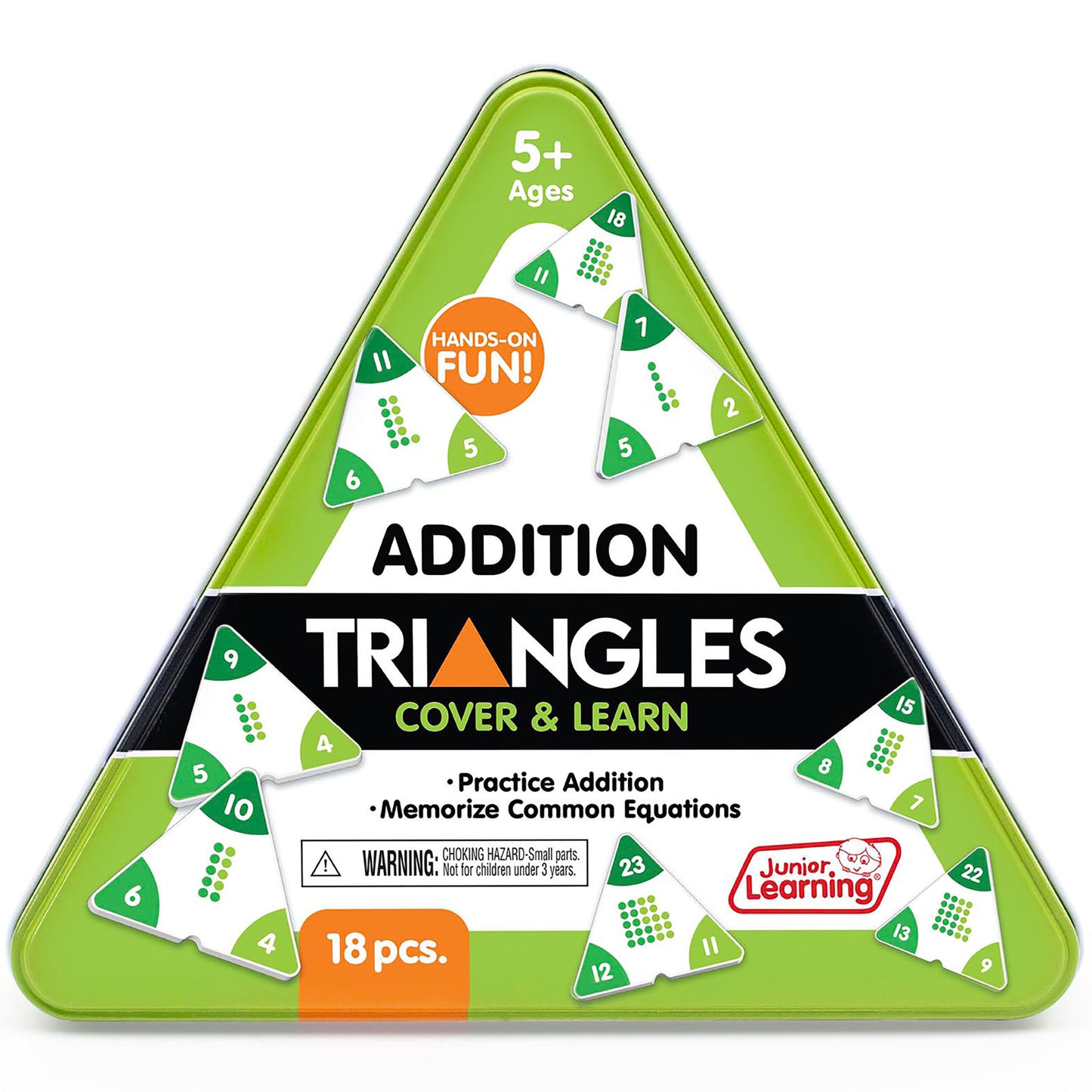
Addition Triangles turn math facts into a hands-on puzzle kids can see and touch. Each durable melamine triangle shows a sum at the top and two addends at the bottom corners, with a color-coded visual in the center that makes the relationship between numbers concrete. Kids cover one number at a time to practice addition, subtraction, or finding the missing number in a fact family. The cover-and-reveal format lets learners self-check as they go, building fluency with sums up to 18 without relying on worksheets.
- Teaches addition and subtraction fact families up to 18 through visual, tactile practice
- Each triangle displays the sum at top and addends at bottom corners for joining, separating, or finding missing numbers
- Set includes 36 triangles plus a fact families anchor chart
- Color-coded visuals in the center reinforce the relationship between numbers
- Works in classroom centers, small groups, tutoring sessions, or at-home practice
You May Also Like

Fashems My Little Pony Collectible Squishy Mini Figures


AquaPlay Harbor Waterway Playset With Crane, Pump, Slide, 3 Boats And 2 Figures


Discovery #MINDBLOWN Sensory Science Test Tube Chemistry Lab Set
Full Details
Care Notes
- cleaning: Wipe melamine plastic triangles with a damp cloth and mild soap, then dry thoroughly.
- storage: Store flat or in a container to prevent warping of the plastic triangles.
Use Cases
- Elementary classroom math centers for practicing addition facts
- Small group instruction for students learning fact families
- One-on-one tutoring sessions to reinforce addition and subtraction
- Homeschool math curriculum supplement for hands-on learning
- Intervention support for students struggling with abstract math concepts
- Independent practice station for early elementary students
- Summer learning activity to prevent math skill loss
Skills Developed
- primary skill: Addition and subtraction fact fluency
- mathematical reasoning: Understanding of fact families and the inverse relationship between addition and subtraction
- number sense: Recognizing number relationships and part-whole concepts
- visual learning: Connecting symbolic numbers to visual quantity representations
Age Suitability
- minimum safe age: 5 years
- ideal age range: 5-8 years
- developmental fit: 5-7 years: Perfect for kindergarten through second grade students learning foundational addition and subtraction facts and building number sense through manipulative-based practice. 8-10 years: Useful for students needing remedial support or extra practice to build automaticity with basic math facts before moving to multi-digit operations.
Play Patterns
- primary play type: Structured educational practice
- play structure: Self-checking drill and practice where students cover one number, solve mentally, then reveal to check their answer
- social context: Works for independent practice, partner quizzing, or small group instruction
- adult involvement: Initial instruction needed to demonstrate how to use the triangles, then students can practice independently or with peers
- play progression: Students begin with easier sums and progress to more challenging equations as fluency builds, can also move from addition-only to mixed addition and subtraction practice
- session length: 10 to 20 minute focused practice sessions work well for maintaining engagement and building automaticity
Why It Works
- primary benefit: Transforms abstract addition and subtraction into concrete, visual learning by allowing children to physically manipulate and cover numbers while seeing color-coded quantity representations.
- secondary benefit: Builds automatic recall of math facts through repeated hands-on practice with the same number families, strengthening mental math fluency.
What Makes It Fun
- Cover a corner, guess the missing number, and flip to check. Each triangle works three ways, turning addition and subtraction facts into a fast, beat-th...
Why They'll Love It
- * 36 magic triangles teach addition facts up to 18 * Cover corners to self-check and practice subtraction * Fact families anchor chart shows number relationships
Customer Q&A
What math skills does this teach?
This set teaches addition facts and subtraction facts up to 18, including fact families where students learn the relationship between addition and subtraction using the same three numbers.
How do children use the triangles?
Children cover one number on the triangle to practice finding the missing number. They can cover the sum at the top to practice addition, or cover one of the bottom addends to practice subtraction or finding the missing addend.
What are the triangles made of?
The triangles are made of durable melamine plastic designed for repeated classroom use.
Does this include visual aids?
Yes, each triangle includes a color-coded visual representation in the center that shows the addition concept visually, helping children connect abstract numbers to concrete quantities.
Can this be used for both addition and subtraction?
Yes, the triangle format teaches fact families, so students practice both addition and subtraction using the same set of numbers on each triangle.
What equations are included?
The set covers common addition and subtraction equations with sums up to 18, including both single-digit and two-digit addition problems.

